Base location
A base-location prompt captures where the robot base appears in the image.
SHEC3R
A Robot-Grounded Neural Initializer
for Stationary Eye-to-Hand Calibration
Manuscript under review · Submitted to ICRA 2027
From RGB observations and robot masks to a shared camera–base transform and a dense 3D reconstruction, in a single forward pass.
Stationary eye-to-hand calibration estimates the rigid transform between a fixed camera and the robot base. Silhouette-based differentiable rendering can be highly accurate, but its non-convex objective makes the starting estimate critical.
SHEC3R learns that starting estimate. Robot-grounded prompts condition a pretrained visual-geometry backbone on the base location, projected base-axis directions, and the visible arm configuration. Cross-frame attention combines evidence from multiple observations into a shared calibration.
The feed-forward stage requires RGB frames and robot masks, without a calibration board, robot meshes, or joint readings. One depth frame recovers metric scale. The estimate can also initialize an optional differentiable-rendering stage, which additionally requires robot meshes and joint readings.
2 min 53 s · Download MP4 · Read the method overview
Three complementary prompts connect a visual-geometry prior to the robot base frame.
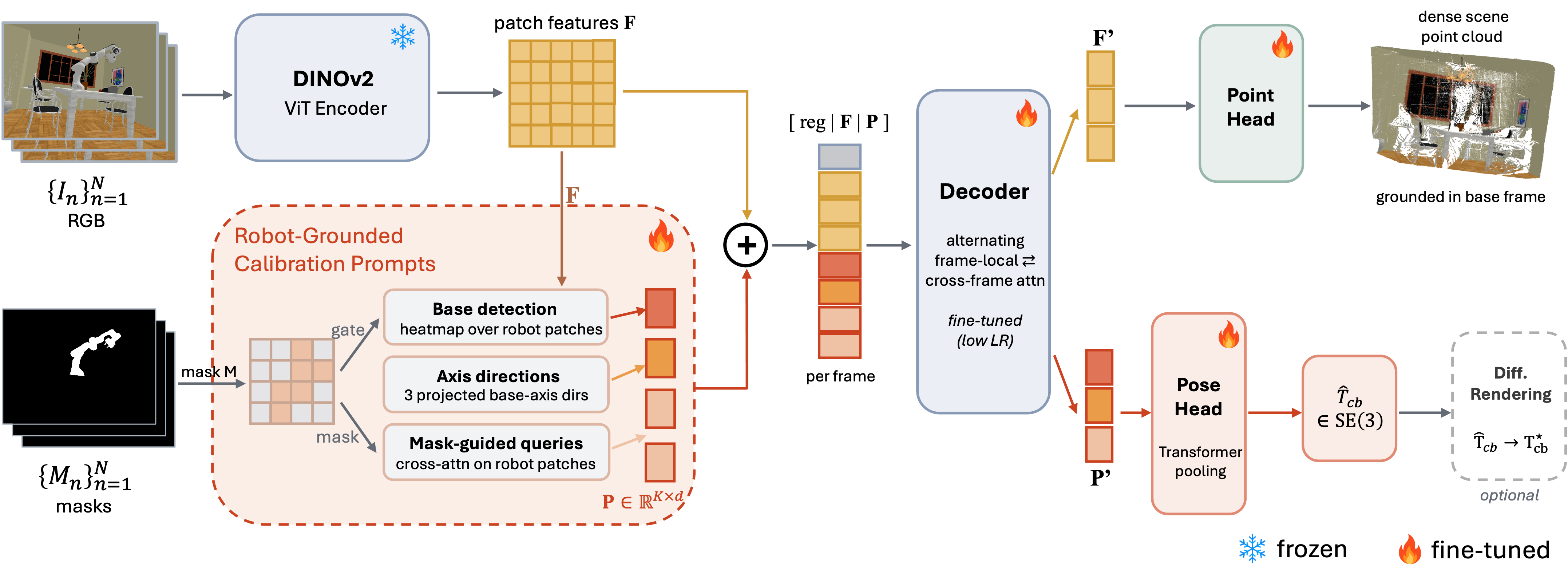
A base-location prompt captures where the robot base appears in the image.
Projected base-axis directions provide cues for the orientation of the robot frame.
Mask-guided arm prompts gather evidence from the visible robot across observations.
The neural initializer uses RGB + masks; metric scale uses one depth frame. Optional DR refinement additionally uses URDF meshes and joint readings.
Evaluation on the same scenes with a shared differentiable-rendering stage, varying only the initializer.
| Evaluation split | Initializer | S@5° ↑ | Final rotation ↓ |
|---|---|---|---|
| Simulation 400 scenes | EasyHeC | 25.2% | 80.5° |
| EasyHeC++ | 8.0% | 88.6° | |
| SHEC3R | 80.2% | 0.05° | |
| Real 86 scenes | EasyHeC++ | 15.1% | 80.7° |
| SHEC3R | 86.0% | 0.74° |
S@5° is the percentage of scenes with final rotation error below 5°. These are refined results, not feed-forward-only results. Figures reproduced from Table I of the manuscript.
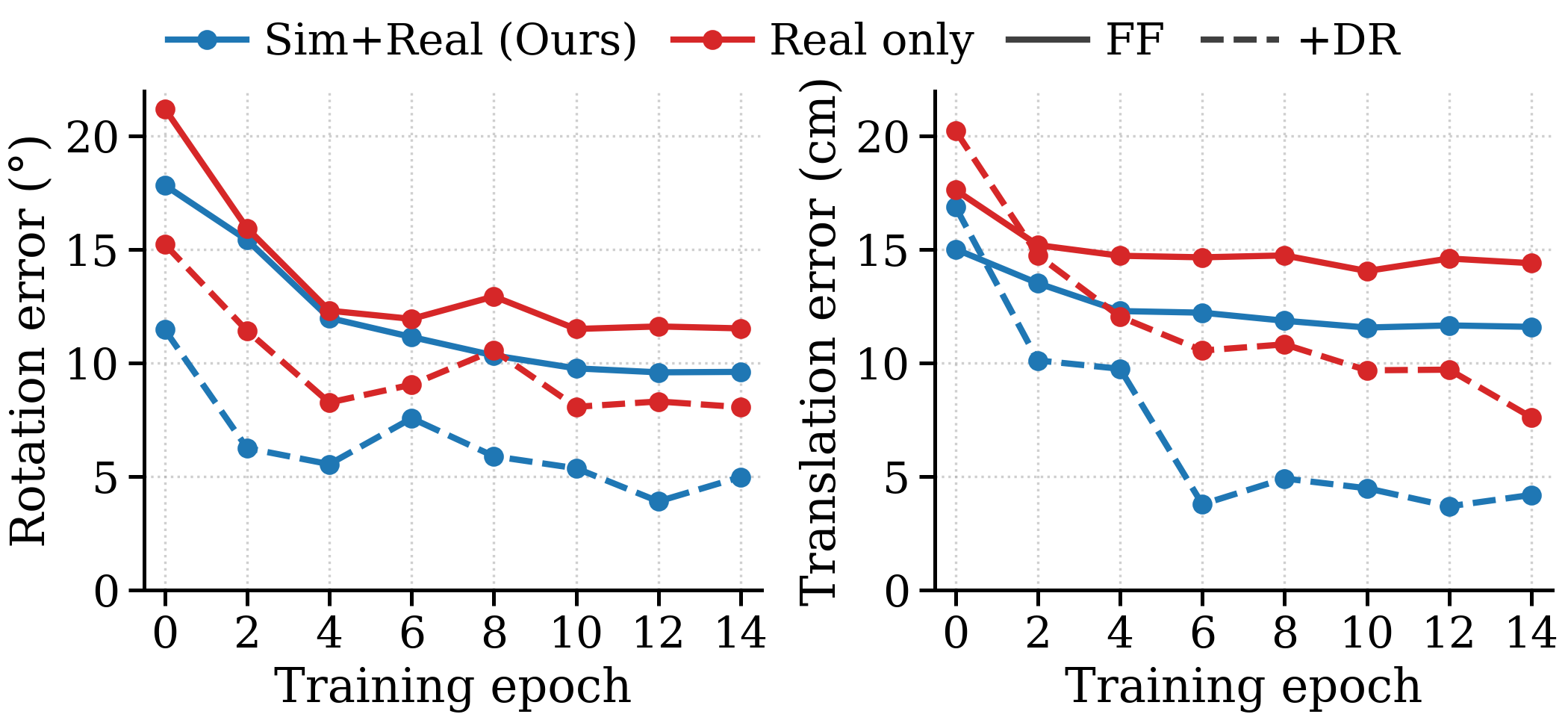
The manuscript also evaluates an external platform: the Flexiv Rizon 4 subset of RH20T. On the combined real evaluation set of 647 scenes, SHEC3R reaches 90.3% S@5° after refinement. See the paper for split definitions and limitations.
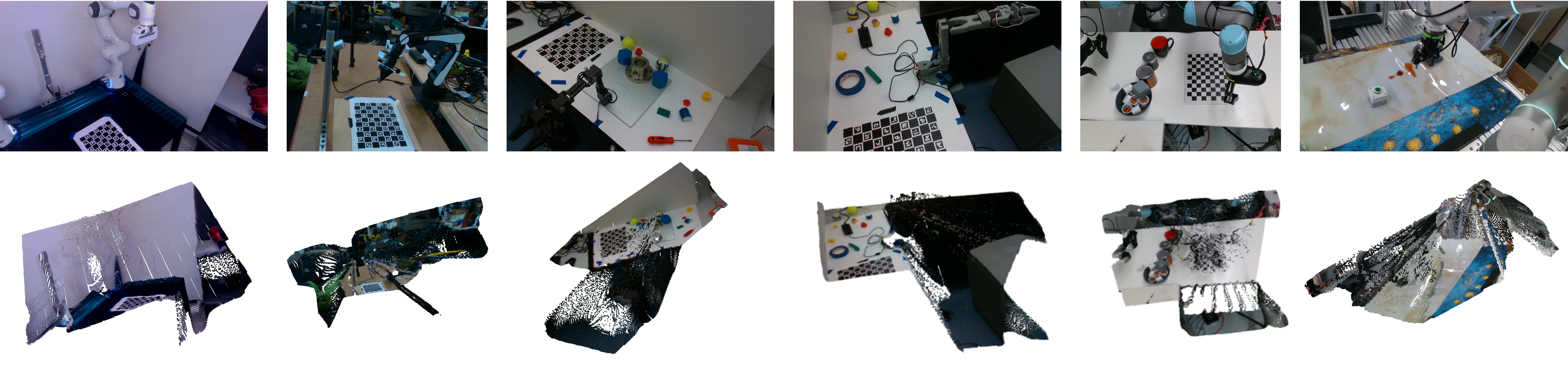
Synthetic and real-world data across camera layouts, scenes, and robot morphologies.
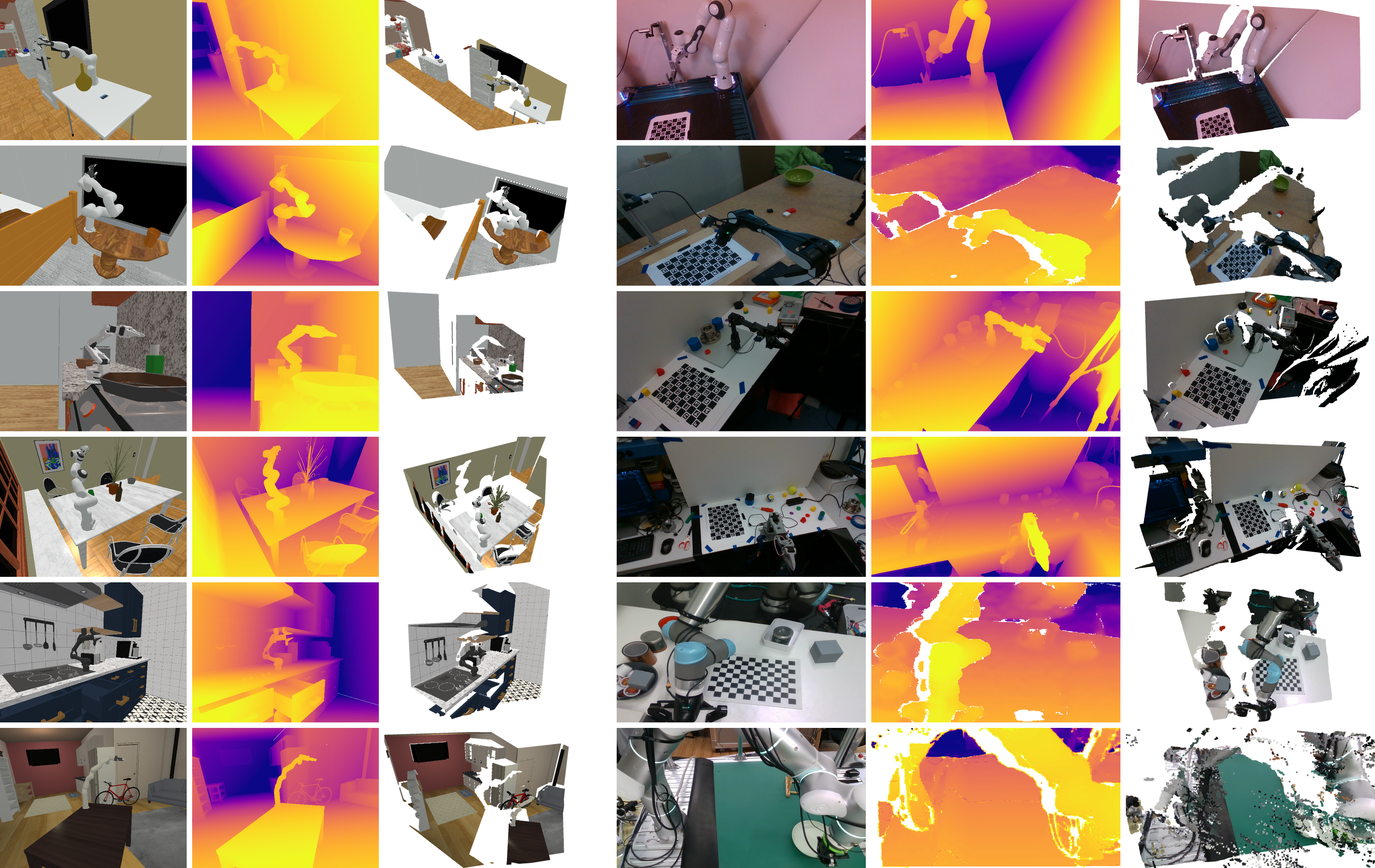
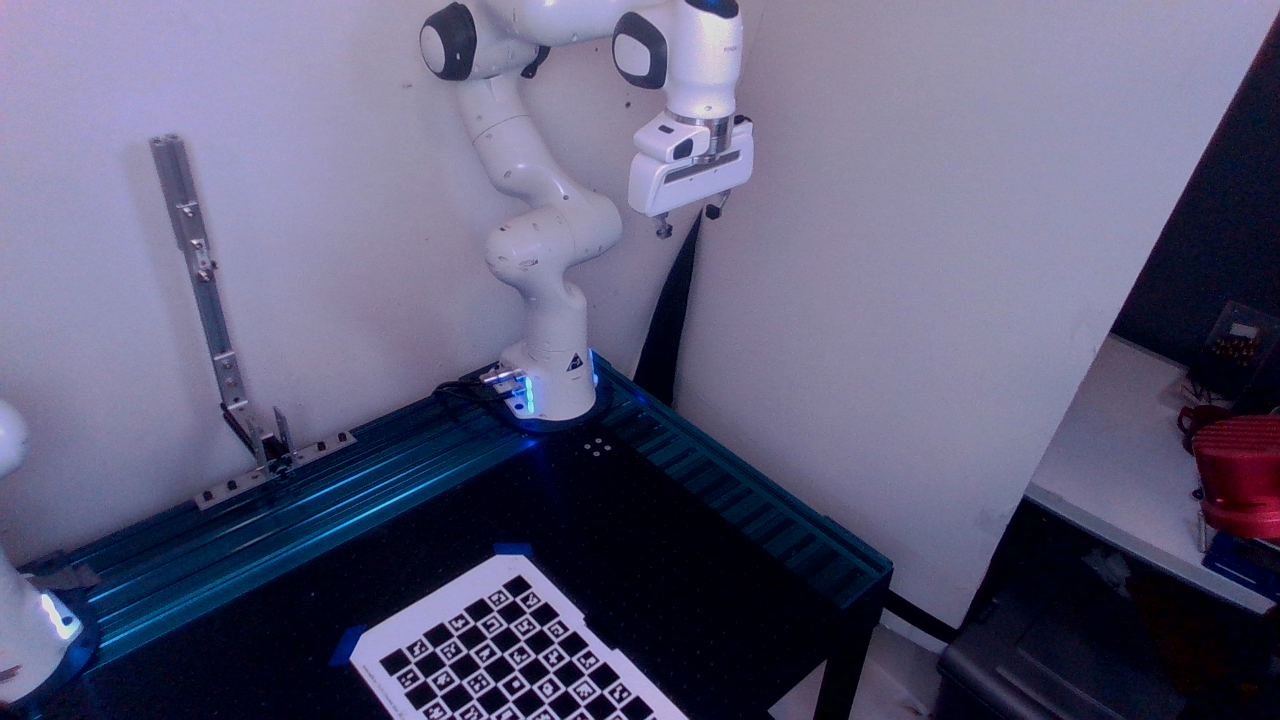
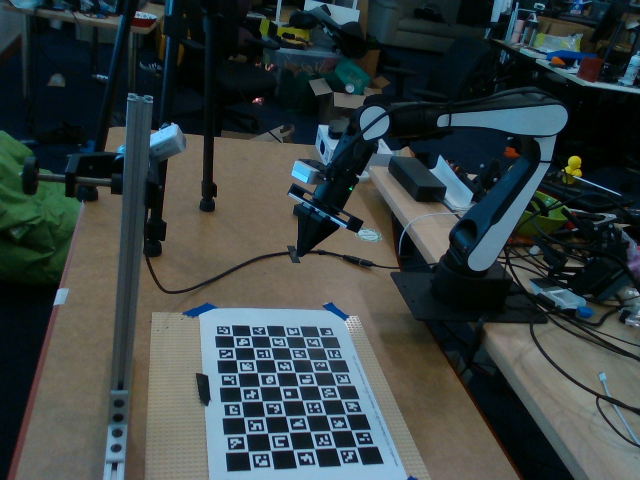
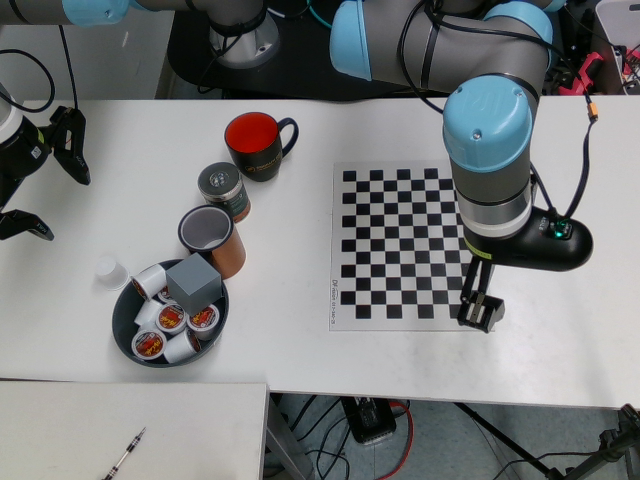
Simulation. Franka Panda, xArm6, SO-100, and WidowX-AI, across eight scene types.
Physical capture. Franka, AIRBOT Play, SO-101, OpenManipulatorX, and UR5e, across nine environments.
@misc{shec3r2026,
  title = {SHEC3R: A Robot-Grounded Neural Initializer
           for Stationary Eye-to-Hand Calibration},
  author = {Zhang, Hangxing and
            Dou, Zhiyang and
            Ma, Yuxiang and
            Ye, Pengfei and
            Li, Peihao and
            Guo, Yaowei and
            Yan, Mingxuan and
            Li, Jinzhou and
            Tao, Yiran and
            Liu, Yuan and
            Gan, Chuang and
            Jiang, Ying and
            Li, Jiachen and
            Ivanov, Yuri and
            Matusik, Wojciech},
  year = {2026},
  note = {Manuscript under review}
}
Update with the public preprint metadata before citing.